SFU Lost & Found
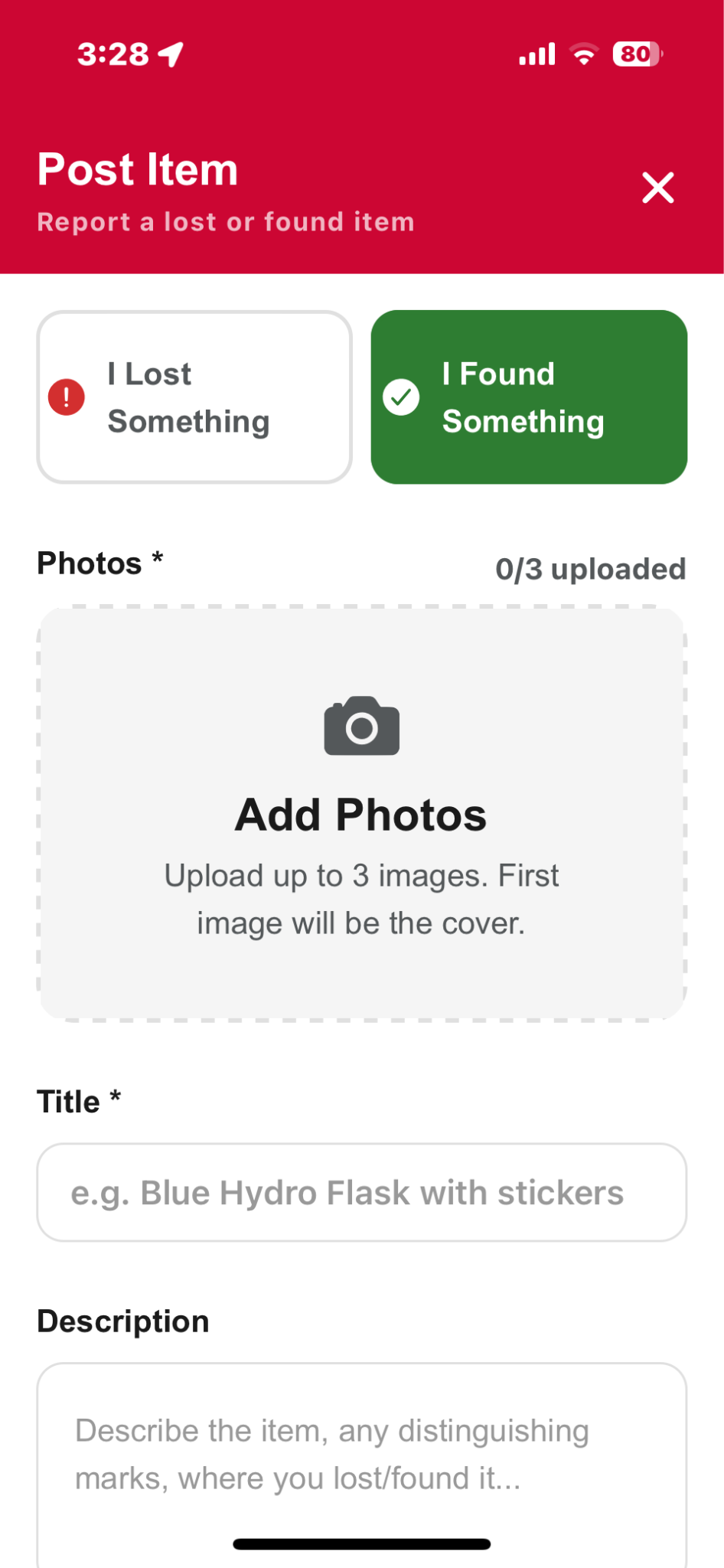
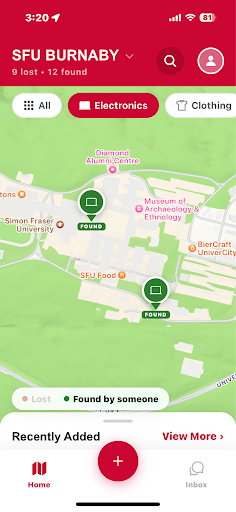
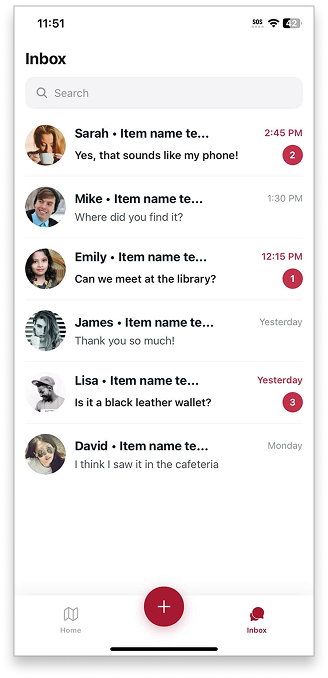
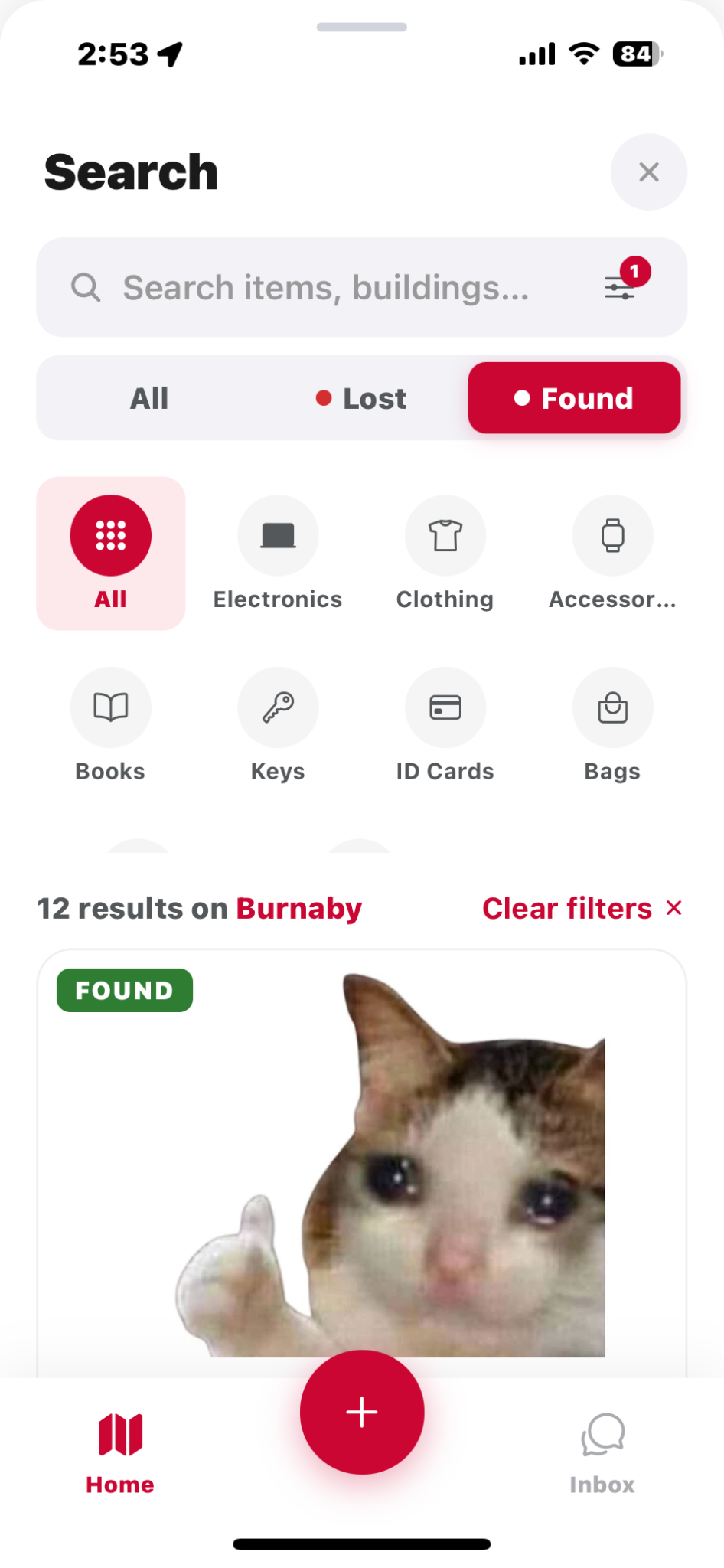
A mobile-first, SFU-only Lost & Found that turns the campus itself into the network that gets your stuff back. Post a lost item, browse what has been found, and message the finder directly, all inside a closed network gated to verified SFU email.
2025
Mobile Engineer & Designer
- React Native
- Expo
- TypeScript
- Supabase
Tech Stack
Technologies and tools used to bring this project to life.
- React Native
- Expo
- TypeScript
- Supabase
- PostgreSQL
- PostGIS
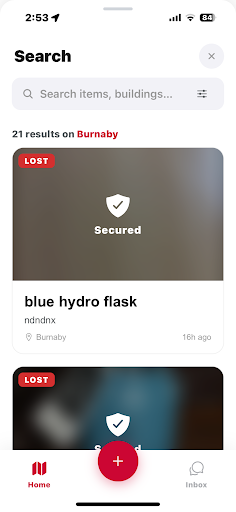
My Role
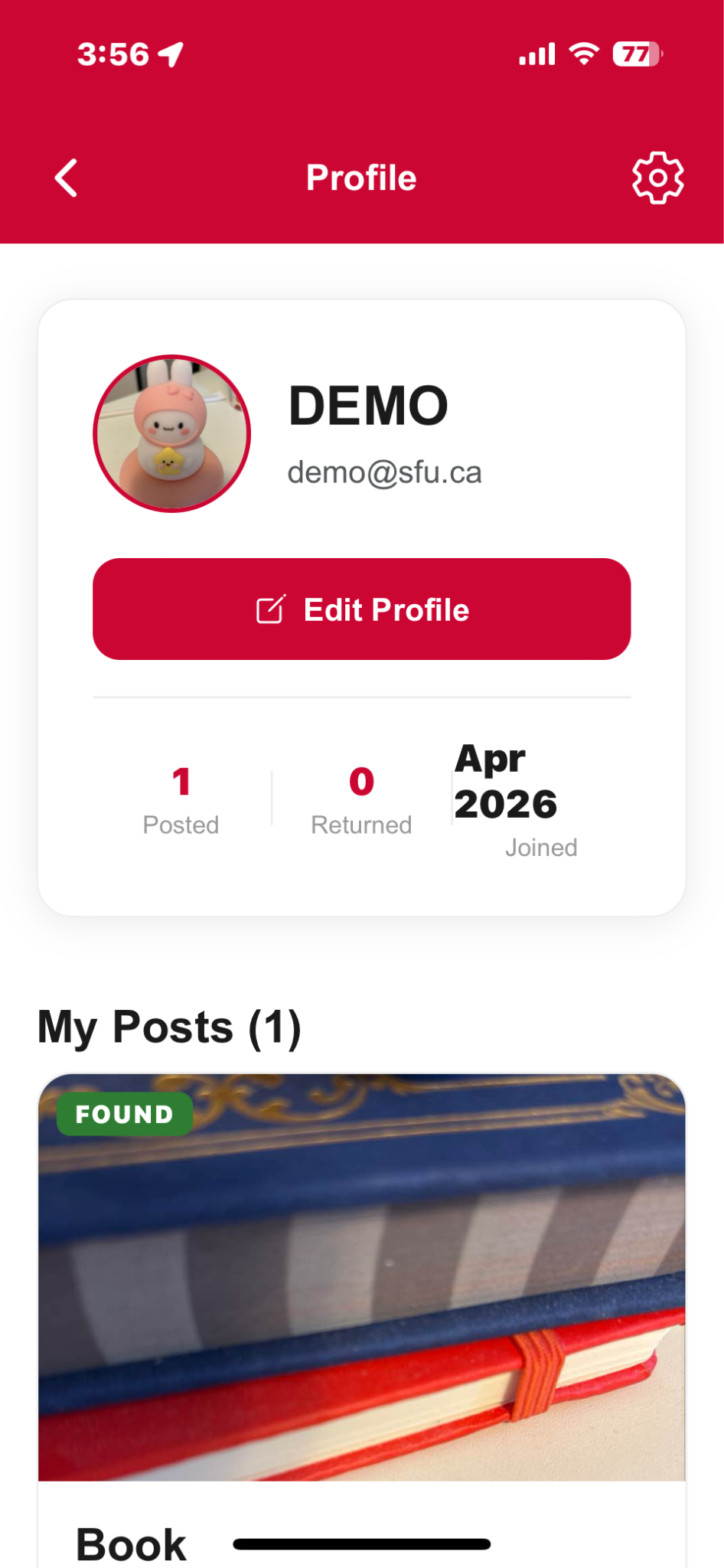
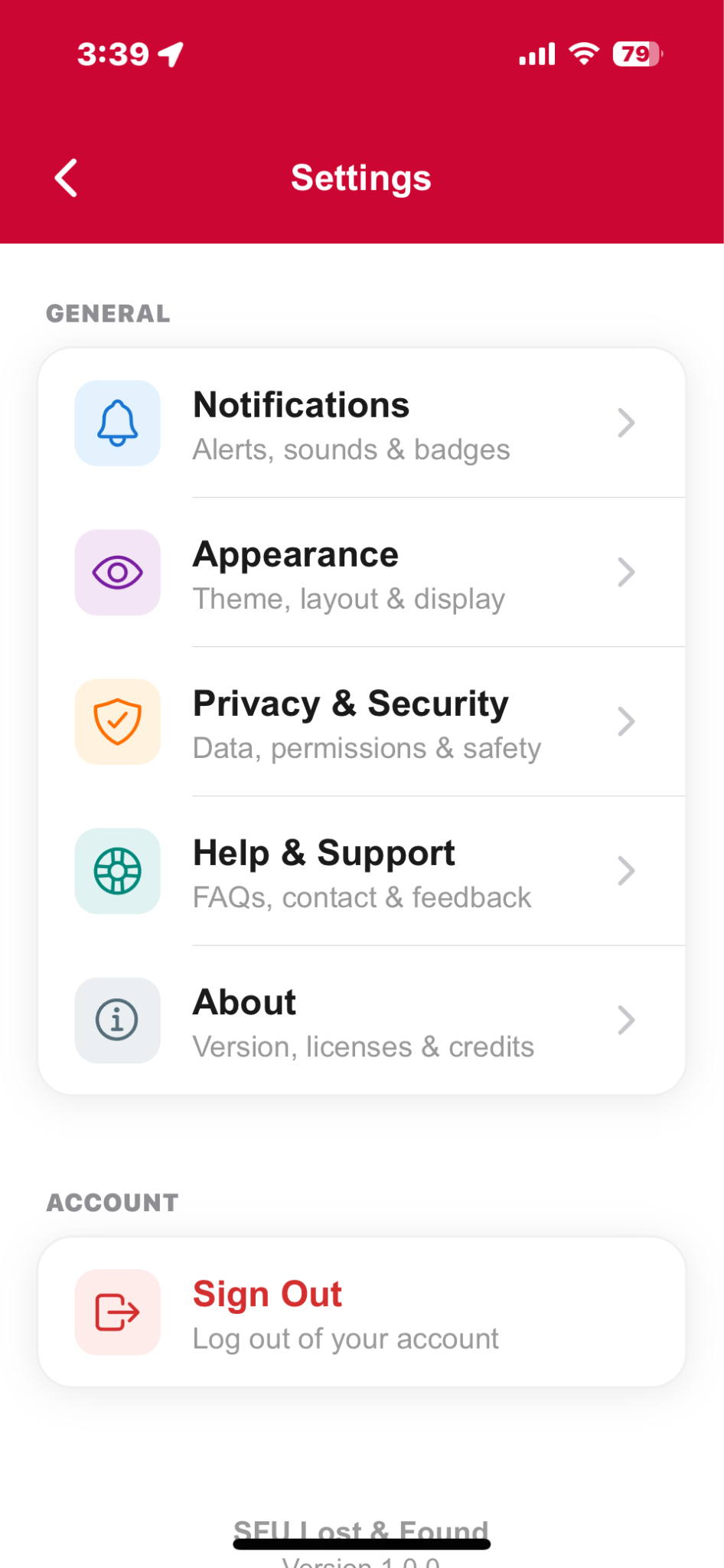
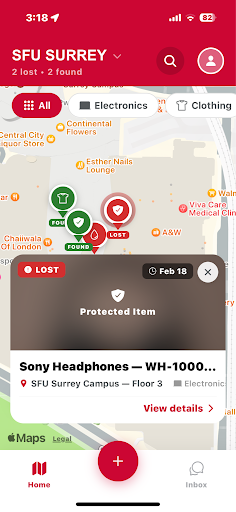
Mobile Engineer & Designer • A few of the surfaces I shaped on this project
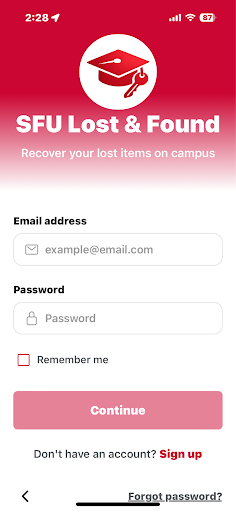
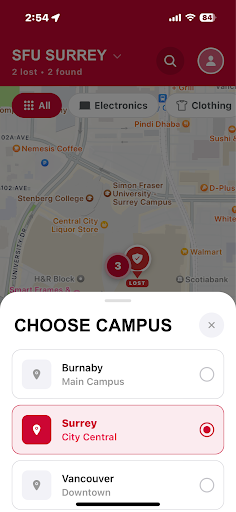
SFU-only access
Sign-in is gated to verified SFU email addresses. The moment that constraint is in place, an open lost-and-found stops looking anything like an open lost-and-found: no scams, no ad bots, no cross-campus noise, just students who actually share the same hallways as your item.
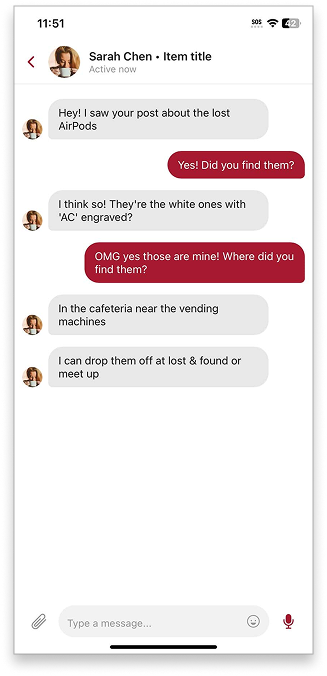
In-app coordination
Once a finder and an owner connect on a posted item, a one-tap DM thread opens between them so the handoff (where, when, identifying details) can happen entirely inside the app. Personal contact information never has to leave the SFU email layer.
Two-tap posting
Reporting a lost or found item is a focused single-screen flow: photo, category, building pin, and a short note. The form is built so a student can finish a post in the time it takes to walk between two lecture halls, not in the time it takes to write an email.
SFU Lost & Found is a mobile-first campus recovery network built specifically for Simon Fraser University students. The platform allows users to report, discover, and reclaim lost items through a verified SFU-only system.
My focus was designing a frictionless posting and communication flow while solving moderation and trust challenges common in open community marketplaces.
Behind the scenes, most of the moderation work runs at the database layer rather than the application layer. Row-level security policies enforce who can see what (your own posts, campus posts, archived posts), and PostGIS constrains geotagging to actual building polygons so items cannot be pinned in the middle of a parking lot or on the wrong campus. The result is an app whose moderation surface is effectively a single screen instead of a full back-office.